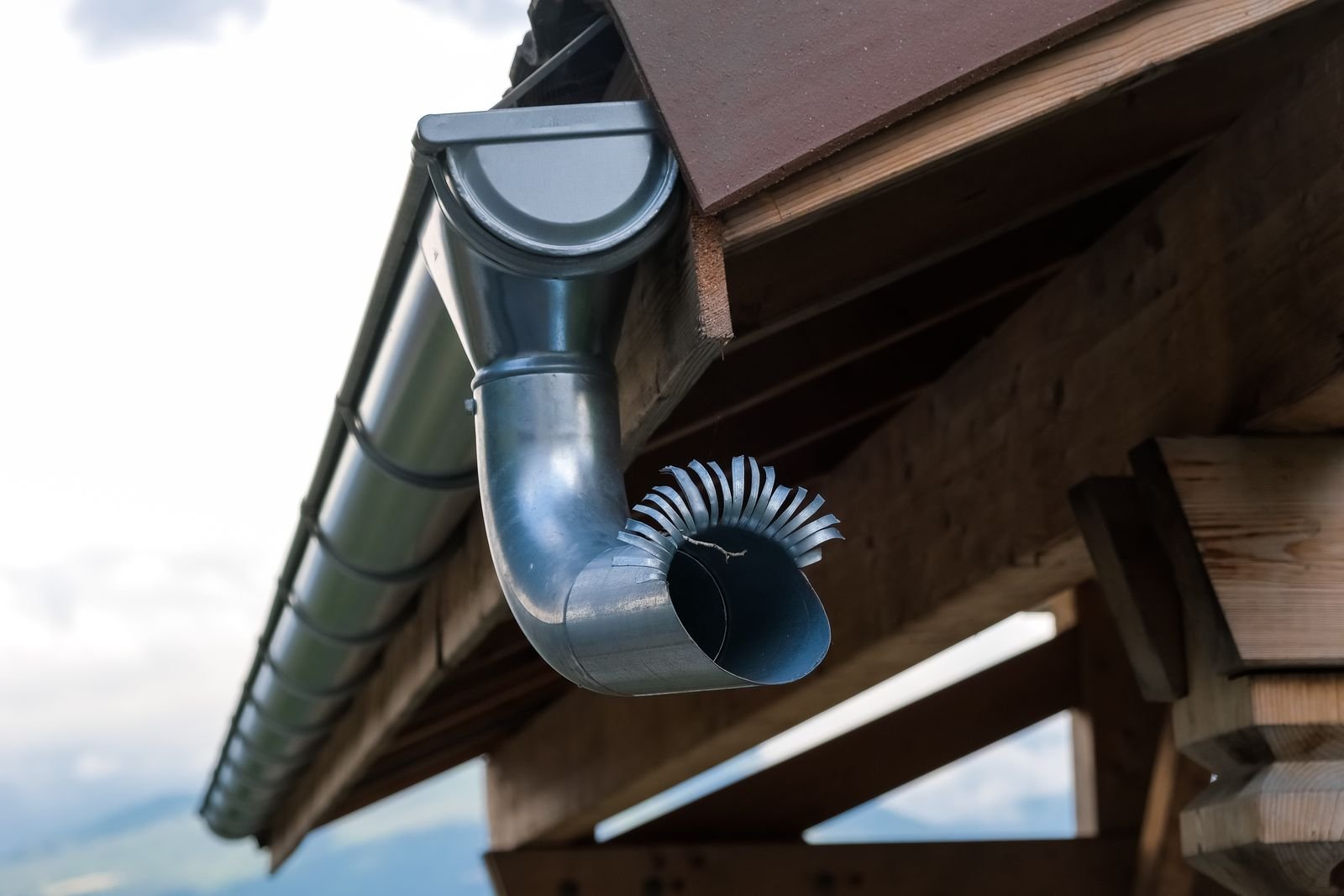
Water pouring over the top of your downspout — or bubbling out of its seams — while the rest of the gutter looks clean? The clog isn’t in the gutter. It’s in the downspout, and it’s the most common problem we find on Richmond homes. We clear the full line, flush it with water, and prove it drains before we leave.
📞 Call or Text (804) 701-4759 Get a Free Estimate
✓ Every downspout water-tested ✓ Clog removed & hauled away ✓ Firm quote up front
Why Downspouts Clog So Often in Richmond
A gutter is wide open; a downspout is a narrow pipe with two or three elbows. Everything Richmond’s trees drop funnels toward that pipe — and sweetgum balls are practically engineered to jam it. They wedge at the first elbow, then leaves, pine straw, and shingle grit pack in behind them until the column is solid. Willow oak leaves are small enough to slip past most gutter guards, so even guarded systems end up with packed downspouts.
Once a downspout blocks, the gutter above it becomes a bathtub with no drain. Water rises, overflows at the corner, and dumps beside your foundation — and in Richmond’s slow-draining clay soil, it sits there. That’s how a $10 clog turns into damp basements and crawlspaces in the Fan, Bellevue, and Bon Air’s older housing stock.
Prices here are indicative for Richmond-area homes, not a quote. The binding figure follows an assessment of the property.
Signs Your Downspout Is Clogged
Overflow at one corner of the gutter during rain — the classic sign. The run is fine; the exit is blocked.
Water leaking from downspout seams and joints. Pressure builds behind the clog and forces water out sideways.
Little or no water at the bottom outlet during a storm while the roof is clearly shedding plenty.
A soggy strip or persistent puddle at the foundation near where a downspout lands — or a musty crawlspace after every rain.
Rattling or thudding in the pipe when debris shifts but can’t pass the elbow.
What Our Downspout Cleaning Includes
Clearing the top outlet and strainer. The gutter-to-downspout junction catches the worst of the debris — we clear it by hand first.
Breaking up the clog through the elbows. Elbows are where sweetgum balls wedge. We work the blockage loose from above and below rather than smashing the pipe.
A full water flush of every line. Every downspout on the house gets a hose run through it until water flows freely at the ground — that’s the pass/fail test, and we don’t leave until every line passes.
Buried drain check. Many Richmond homes — especially older ones in the Fan, Museum District, and Windsor Farms — have downspouts that duck into underground pipes. We test whether the buried line accepts water. If it’s the underground section that’s blocked, we’ll tell you exactly where the problem is and what your options are, so you’re not paying a plumber to diagnose what we already found.
Debris bagged and hauled away. Whatever comes out of the pipe leaves with us.
Can You Clear a Downspout Yourself?
Sometimes — and we’ll be straight with you about it. If the clog is right at the top outlet, you can often scoop it out from a ladder. A garden hose run down the pipe at full pressure will push out loose debris, and a hardware-store drain snake can break up a soft blockage in a straight run.
Where DIY goes wrong is the elbows and the ladder. A wedged sweetgum-ball clog at the second elbow won’t yield to a hose, and forcing a snake past it from a ladder is how downspout seams get split and homeowners get hurt — falls from ladders send thousands of people to the ER every year, and wet aluminum, uneven Richmond brick walks, and soft post-rain ground make it worse. If one flush from the ground doesn’t clear it, that’s the point where calling us costs less than replacing a kinked downspout — and we water-test the whole system while we’re up there anyway.
Buried drain lines are the other exception: clearing an underground pipe takes a powered auger or jetter. We’ll diagnose exactly where the blockage sits so if a specialist is needed, they’re digging in the right place from minute one.
Inside a Richmond Service Call
Every downspout job follows the same order. It is not complicated, but the order is what separates a line that actually runs from one that looks fine from the ground.
- Trough first, outlet second. There is no point flushing while the gutter above is still loaded — the debris washes straight back into the opening.
- Hand-clear the drop outlet. Most Richmond clogs are a compacted plug in the first six to ten inches: shingle grit, willow oak catkins and leaf stems bound together. It comes out by hand, not by hose.
- Flush from the top, watch the bottom. Water going in proves nothing. What matters is the volume and timing arriving at the discharge end.
- Work the elbows. The eave elbow and the one at grade are the next most common blockage points. They get tapped and worked, never forced.
- Report what we found. If the line runs clear you are told it runs clear. If it does not, you are told exactly where it stops — not “should be fine now.”
Richmond’s Tropical-Season Problem
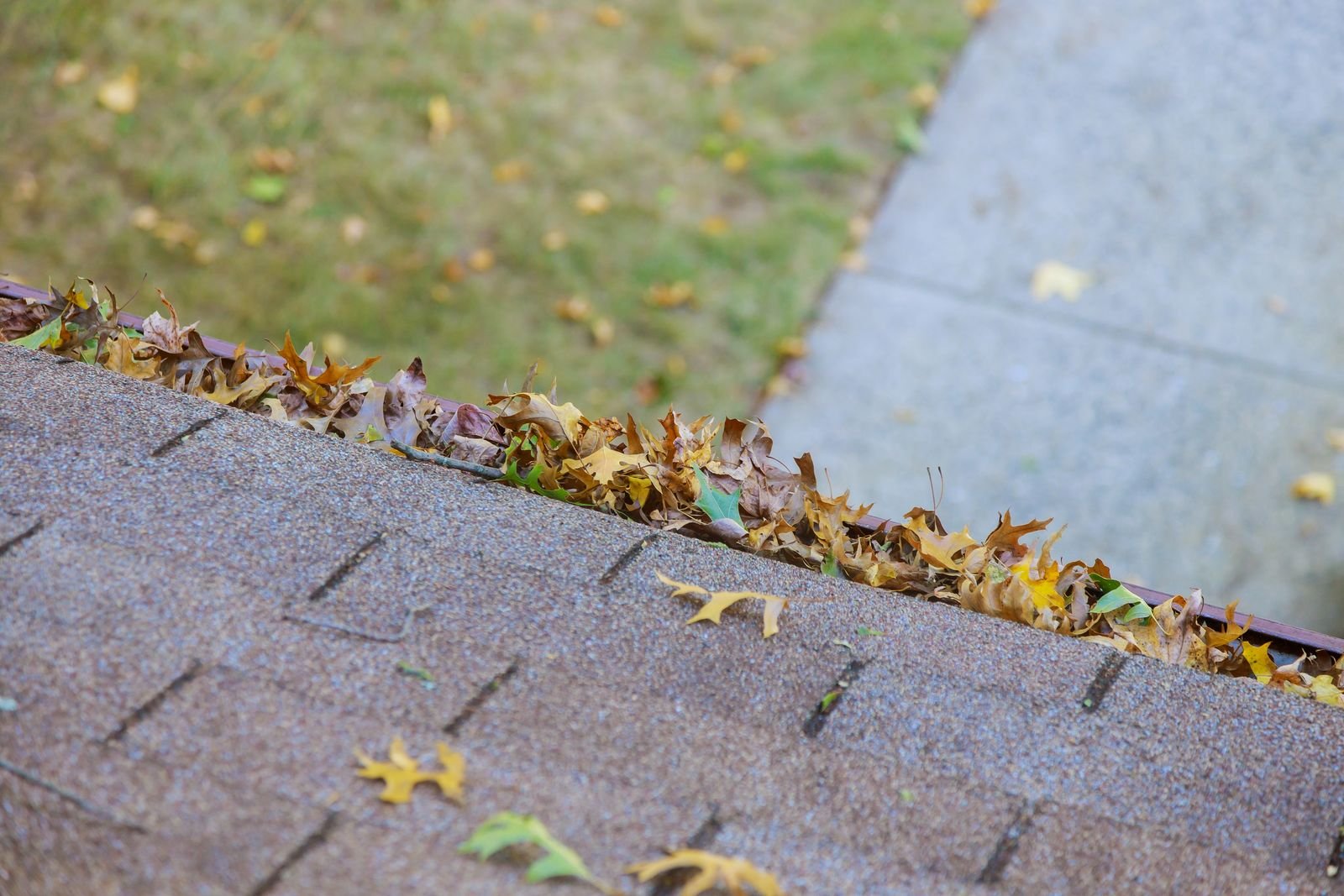
Most gutter advice assumes debris builds slowly through autumn. Richmond has a second season that catches people out entirely: late August into October, when the remnants of tropical systems track up the coast and dump several inches of rain in a few hours.
That timing is unfortunate, because it lands right as the first leaf drop begins. A downspout carrying early-season litter meets a rainfall rate it was never sized for, and water goes over the front edge instead of down the pipe. Homeowners read that as a gutter problem when the gutter is usually fine — the outlet is simply the bottleneck.
The other local factor is what falls here. Willow oak is the dominant street tree across much of Henrico and the older city neighborhoods, and it sheds twice: catkins and small leaf litter in spring, then leaves in autumn. Both are fine and stringy, which is exactly the kind of debris that packs into an outlet and stays. Tulip poplar and loblolly pine add to it on the Chesterfield side.
What This Costs in Richmond
Downspout clearing is included in a standard gutter cleaning on virtually every job we run. It becomes its own charge in a few situations:
- Standalone downspout call — $95 to $175 when the gutters themselves do not need doing.
- Multiple blocked lines or heavy compaction — additional time, quoted before we start rather than added afterward.
- Underground line assessment — we can tell you whether the buried section is the problem and roughly where it stops. Clearing or replacing a collapsed line is drainage work.
- Extensions and splash blocks — inexpensive, and on Richmond’s clay soils the single best thing you can do for water sitting against a foundation.
Full pricing on our Richmond gutter cleaning cost page.
What We Don’t Handle
- Excavation. Buried drain line replacement is a drainage contractor with a machine, not us.
- Pressure inside a downspout. High pressure separates seamed aluminum. We clear mechanically and flush.
- Guarantees on lines we cannot see. We will tell you what we observed and what we suspect, and label which is which.
- Selling you guards to fix an outlet. Guards change what reaches the trough. They do nothing for an outlet that is already packed.
Downspout Cleaning FAQs
Why is water coming out the top of my downspout?
There’s a blockage below — usually at the first elbow. Water backs up the pipe and exits at the highest opening, which is the top. Clearing the elbow and flushing the line fixes it.
Is downspout cleaning included in gutter cleaning?
With us, always. Every gutter cleaning includes clearing and water-testing every downspout. We also handle downspout-only visits when the gutters are clean but a line is blocked.
How do I know if the clog is underground?
Run a hose into the downspout where it enters the ground. If it backs up immediately, the buried line is blocked; if it swallows water freely, the clog is up in the downspout itself. We run this exact test on every visit to homes with buried drains.
Can a clogged downspout really flood a basement?
It’s one of the most common causes. A blocked line dumps hundreds of gallons per storm right at the foundation, and Richmond’s clay soil holds it against the wall instead of draining it away.
How often should downspouts be cleaned?
Same schedule as gutters — spring and fall for most Richmond homes, with a third pass under heavy oak or sweetgum cover.
What does it cost?
Downspout clearing is included in our standard cleaning ($150–$400 depending on home size). A downspout-only call is usually less — call with your address and we’ll give you a firm number.
My downspout drains into the ground. Can you tell if that is the problem?
We can tell you whether water is moving and roughly where it stops, and we will flush what is reachable. Excavating a collapsed buried line is drainage work — we will say so plainly rather than charge you to guess.
Why does water pour over the front edge in a heavy storm even after cleaning?
Usually rainfall rate against outlet capacity, not a clog. Richmond gets tropical-remnant downpours in late summer that exceed what a standard 2×3 outlet can move. Larger outlets or an additional downspout is the real fix.
Do you handle box gutters on older city homes?
Sometimes — it depends on access and condition. Box and built-in gutters on the Fan and Church Hill housing stock are a different animal from hung aluminum, and we will be straight about whether it is our job or a roofer’s.
What are the stringy things clogging my downspout in spring?
Willow oak catkins. They drop in spring, they are fine and fibrous, and they pack into a drop outlet more effectively than autumn leaves do. It is why a lot of Richmond homes need a spring visit as well as a fall one.
Can a blocked downspout affect my foundation?
Over time, yes. Richmond sits on clay-heavy soil that swells and shrinks with moisture, and repeatedly saturating the same spot against a footing is a real mechanism. It is slow, which is exactly why it is worth heading off cheaply.
Do you add downspout extensions?
Yes, and on most Richmond lots it is the cheapest improvement available. Moving discharge four to six feet from the wall changes where thousands of gallons a year end up.
Get Your Downspouts Flowing Again
Call (804) 701-4759 for a firm quote, or send the form and we’ll get back to you — usually the same day. Serving Richmond, Henrico, Chesterfield, and the surrounding counties. See our full gutter cleaning service or read more FAQs.